As the temperature drops, it’s common to experience discomfort or heaviness in the legs. If you have varicose veins, you may also notice changes in their appearance. Although this isn’t life-threatening, it can have a negative impact on your life. Fortunately, there are several things you can do to maintain your vein health in cold weather. Find out how Georgia Medical Treatment Center can help with non-surgical vein treatment in Canton.
How Cold Weather Affects Circulation and Vein Health
When it gets cold, your blood vessels constrict (narrow). This minimizes heat loss and helps keep your major organs warm. But with all the heat flowing to your organs, your legs can get cold, causing them to feel heavy and uncomfortable. The heart also has to work harder to pump blood, which often leads to poor circulation.
Common Winter Symptoms of Vein Problems
Increased pain is one of the first signs that winter weather is wreaking havoc on your veins. Like the heart, veins have valves, which prevent blood from flowing backward. If these valves are damaged, blood starts to pool in the legs, leading to ongoing discomfort. Winter vein problems can also cause swelling, cramping and heaviness.
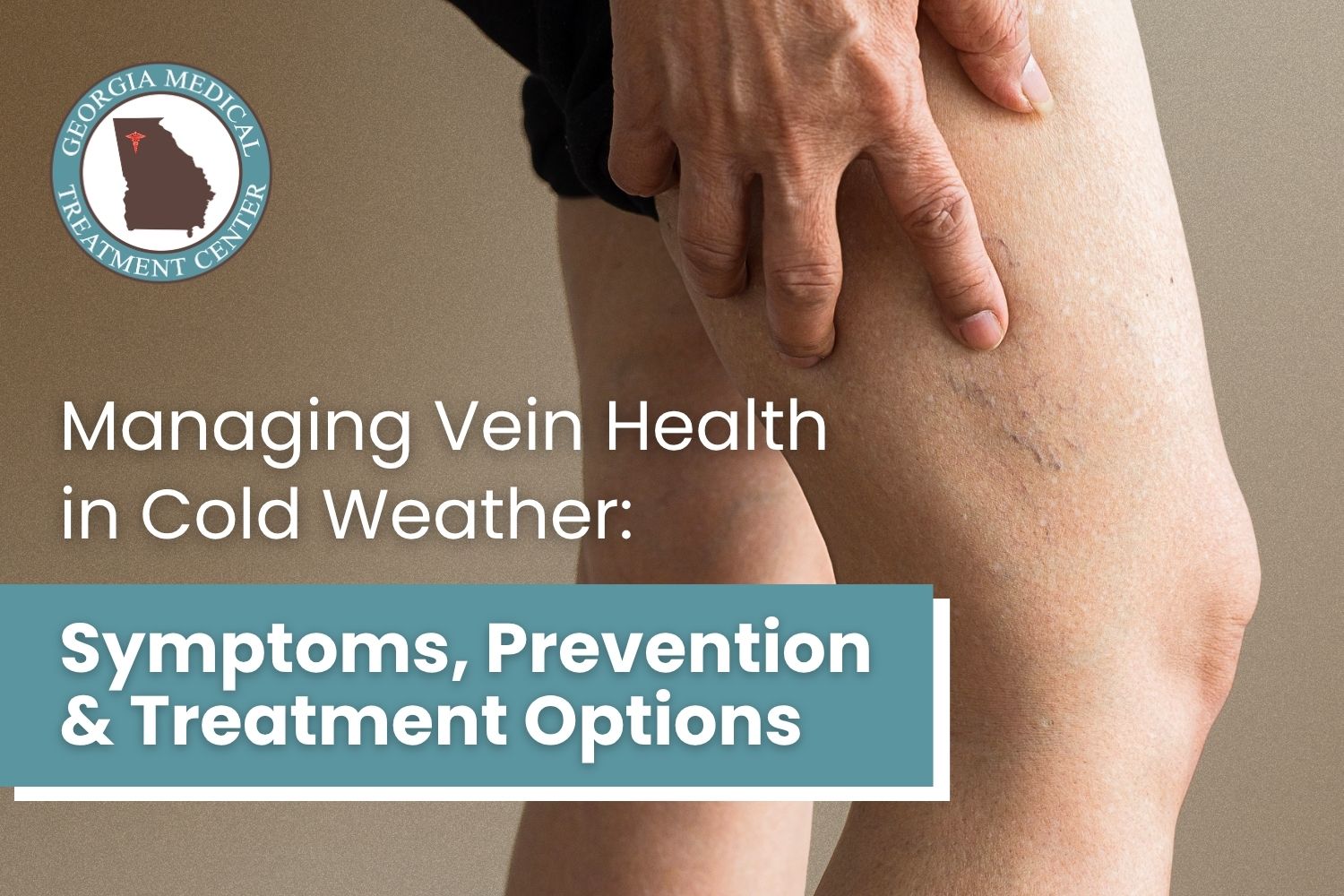
Varicose veins are highly visible, and they can become even more visible when it’s cold outside. Other varicose vein symptoms in winter include legal pain, itching, swelling and nighttime leg cramps. Some people also experience dryness or discoloration of the skin.
Why Canton Residents Should Pay Attention to Vein Health in Winter
In North Georgia, nighttime temperatures often drop below freezing during the winter. It’s also chilly during the daytime, making it critical to pay attention to your vein health. Additionally, most people are less active during the winter. Instead of exploring Etowah River Park or biking along the trails at Blankets Creek, you probably spend your downtime making cocoa or watching movies from the comfort of your couch.
Living a sedentary lifestyle increases the risk of chronic venous insufficiency (CVI), a condition that causes blood to pool in the legs. CVI also contributes to skin discoloration, swelling and an increased risk of varicose veins.
During the winter, North Georgia residents wear heavier clothing to ward off the cold. If you feel warm, you may not realize that your legs are developing cold-related problems. We recommend that you inspect your legs regularly for signs of varicose veins, CVI and other conditions.
Prevention Tips to Protect Your Veins During Cold Weather
Vein pain prevention in Canton, GA, starts with taking a few self-care measures. You may have to stay indoors, but that doesn’t mean you have to be sedentary. Try walking around the house, doing calisthenics or following along with your favorite exercise videos. If you have weights, use them to increase your strength.
Some people have to limit physical activity due to other medical conditions. If this applies to you, try to spend less time sitting. Taking a slow walk from the kitchen to the living room is better than doing no exercise at all.
If your legs swell during the winter, keep them elevated. Lie down and put your legs higher than your heart. This helps blood flow back to the heart instead of pooling in your legs. Wearing compression socks can also help with swelling and pain.
Non-Surgical Vein Treatment Options in Canton, Georgia
Georgia MTC offers several non-surgical vein treatments to relieve your symptoms. VENCLOSE® and Varithena® are both used to help with varicose veins. VENCLOSE uses heat to shrink the damaged vein and seal it closed. Varithena involves injecting microfoam into the damaged vein. This closes the vein, preventing blood from flowing out of damaged valves.
FAQs About Vein Health and Cold Weather
Can cold weather make varicose veins worse?
Yes. Cold weather makes varicose veins worse by slowing circulation. Many people are also less active during the winter, which may worsen varicose vein symptoms.
Do compression stockings really help?
Yes. Compression stockings help push blood from your legs back to your heart, so they can help with swelling, pain and other symptoms.
Should I delay vein treatment until spring?
Winter can make vein symptoms worse, so we recommend seeking treatment right away instead of waiting until spring.
Get Relief from Vein Pain at Georgia Medical Treatment Center
At Georgia MTC, we’re committed to providing lasting pain relief for people with varicose veins, CVI and other vein problems. We offer non-surgical, FDA-approved treatments to improve your symptoms without invasive procedures or long recovery periods. To learn more about prevention strategies or explore your personalized vein treatment options, schedule a consultation today.