Key Takeaways
- Sitting, standing and walking cause different types of stress on the knee and its supporting tissues.
- Pain while using stairs can point to a problem with your knee joint, cartilage or muscles.
- Georgia Medical Treatment Center offers several types of non-surgical knee pain relief.
- You should see a knee pain specialist in Canton if you can’t bear weight, have persistent pain that isn’t relieved by self-care measures or experience pain accompanied by severe swelling.
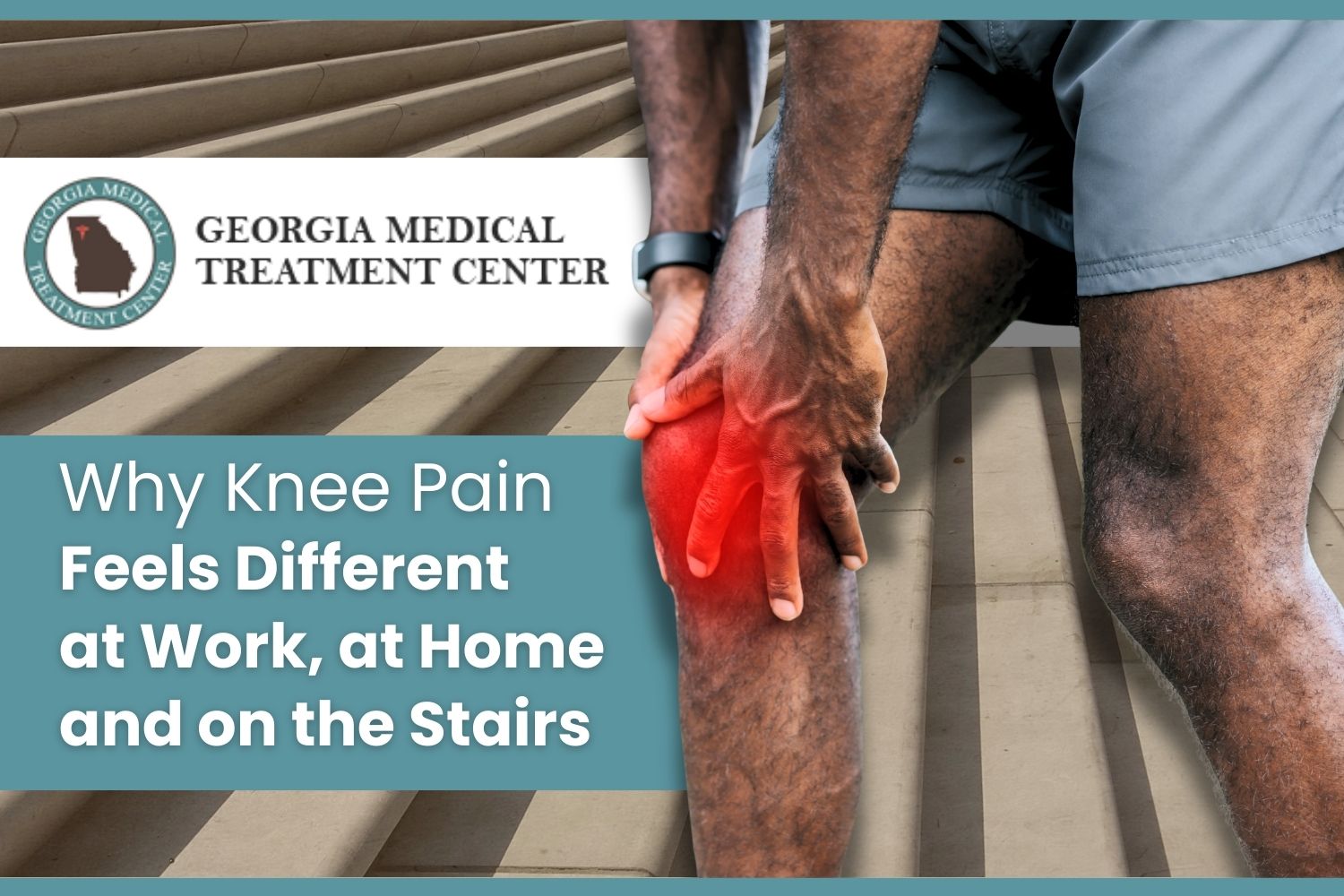
Whether you’re working or relaxing, knee pain can change with different movements. Walking up stairs may cause a dull, aching pain at the front of your knee. Sudden changes in direction can cause sharp, localized pain as you pivot. You may even experience burning, stabbing or aching just from standing for a few minutes. The good news is that a knee pain doctor in Canton can help with these issues.
Why Sitting, Standing and Walking Stress the Knee Differently
Sitting, standing and walking stress the knee differently due to variations in load distribution, joint angle and circulation. When you sit too long without a break, the knee remains in a flexed position. This limits the circulation of synovial fluid, which is the lubricant found in joints. A flexed position also compresses the cartilage between your kneecap and your femur (thigh bone).
Walking allows synovial fluid to circulate properly, but it increases tension and compression on your knee. Due to the repetitive impact, your hamstrings and quadriceps have to work harder to stabilize the joint. Prolonged standing applies your weight directly to your knees, which can increase pressure on the meniscus and the cartilage around your knee joint.
What Stair Pain Can Reveal About Knee Health
Knee pain while using stairs indicates that you may have a problem with cartilage wear, muscle imbalances or patellar misalignment. If the pain occurs while going down stairs, you may have osteoarthritis or a condition known as chondromalacia patella. This occurs when the cartilage under your kneecap begins to soften.
Pain when climbing stairs is often caused by runner’s knee or tendinitis. Some people even experience a locking sensation when using stairs. This sensation may occur due to a meniscus tear.
How a Knee Pain Specialist Identifies the Root Cause of Pain
When you visit a knee pain doctor in Canton, they’ll identify the root cause of your pain by taking the following steps:
- Asking questions about your symptoms
- Reviewing your medical history
- Performing a thorough physical exam
- Ordering imaging (e.g. X-rays, MRI)
Non-Surgical Knee Pain Treatment Options
Georgia Medical Treatment Center offers several non-surgical forms of knee pain relief:
- All-natural knee injections. All-natural knee injections accelerate the healing process, relieving pain and other symptoms. This treatment involves drawing a small amount of your blood, extracting plasma from it and then mixing the plasma with concentrated growth factors.
- Gel injections. Viscosupplementation involves injecting hyaluronic acid into the affected joint. Hyaluronic acid is the same substance found in your natural synovial fluid, so it can help eliminate pain caused by a lack of joint lubrication.
- Physical therapy. Physical therapy restores normal knee function by strengthening the joint and surrounding muscles.
- Steroid injections. Steroids have anti-inflammatory properties, so steroid injections can help relieve knee pain and swelling. We use proven techniques to ensure your comfort and safety.
- Bracing. Bracing helps reduce the mechanical load on your knees, making injections more effective. The braces we use are adjustable and comfortable, making it easier to use them as long as necessary.
When to See a Knee Pain Specialist in Canton
Some knee pain resolves with rest, ice and over-the-counter pain relievers. However, you should see a knee pain specialist in Canton if you experience any of the following:
- Knee pain that doesn’t improve with self-care measures
- Severe swelling around the knee joint
- Inability to bear weight due to your knee pain
Frequently Asked Questions
What common conditions are linked to activity-specific knee pain?
Patellofemoral syndrome, meniscus tears and patellar tendinitis are often linked to activity-specific knee pain. Patellofemoral syndrome, also called runner’s knee, typically causes pain around the kneecap when you run or squat.
Meniscus tears are linked to pain and swelling associated with twisting motions, such as skiing or playing soccer. Patellar tendinitis results in inflammation just below the kneecap.
Why does knee pain often worsen throughout the day?
Knee pain often worsens throughout the day due to repeated stresses on the knee joint and surrounding tissues. When you sleep, your knee has a chance to rest, so you may not have pain early in the morning. As the day progresses, you have to walk, climb stairs and perform other movements. These activities put stress on the knee, causing pain to worsen.