
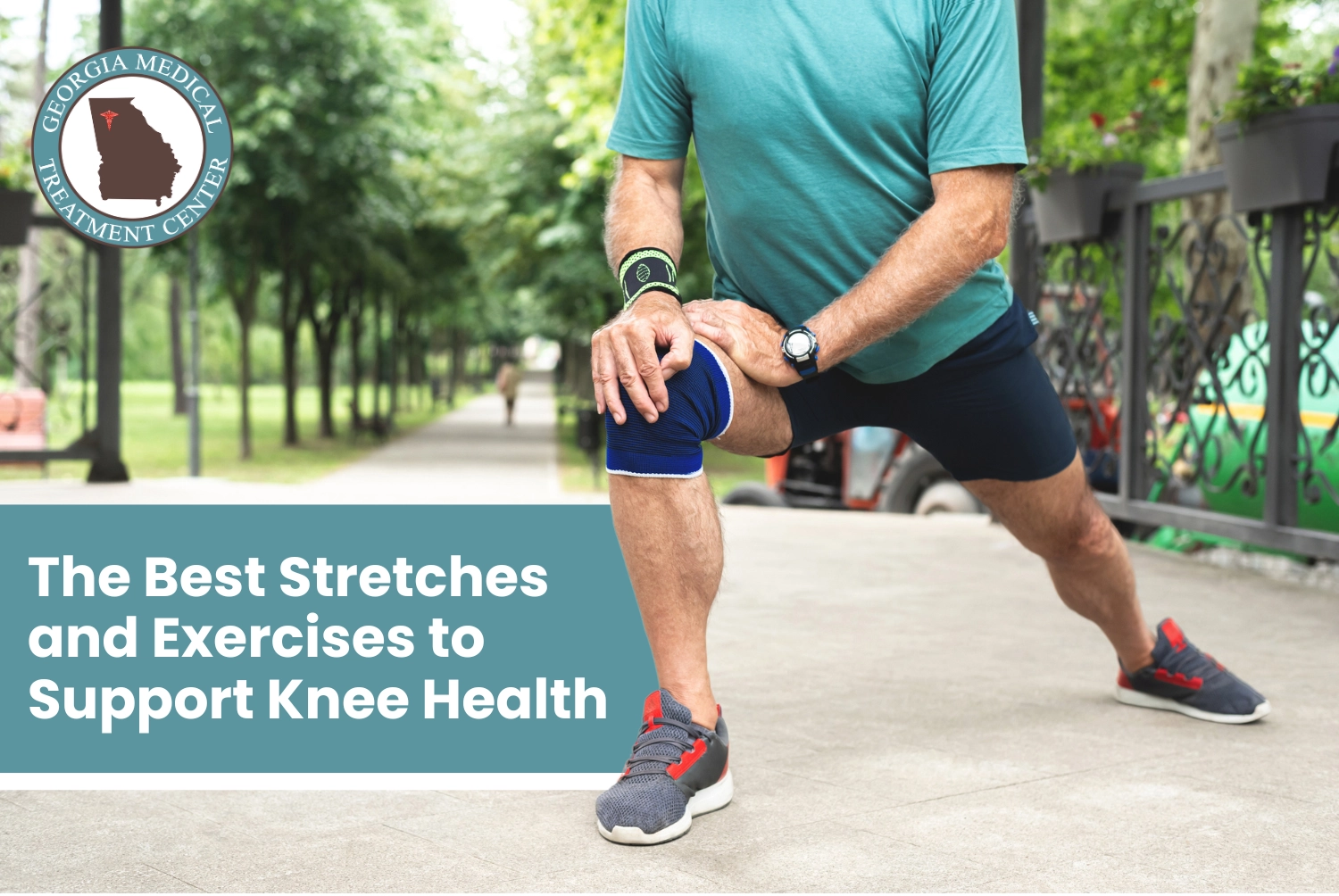
Knee pain makes it more difficult to walk, climb stairs and stand for long periods of time, so it can really affect your mobility. If the pain persists, you might also have trouble sleeping comfortably, performing household tasks or even getting into and out of the shower. Georgia Medical Treatment Center can help. Our knee pain specialists have extensive experience diagnosing and treating knee disorders.
If you’re tired of chronic knee pain, try these knee exercises in Canton. Stretching and strengthening exercises can help relieve chronic pain without surgery, making them the first line of defense for anyone with persistent knee pain.
Why Stretching Is Essential for Maintaining Knee Health
Stretching strengthens the muscles around your knee joints, providing more stability overall. Following a consistent stretching routine can also help you increase flexibility in your hamstrings and quadriceps, reducing the risk of knee injuries when you’re playing tennis, hiking your favorite trail or climbing stairs.
Top Stretches Recommended by Canton’s Leading Knee Pain Clinic
If you have persistent pain, you may benefit from performing these knee exercises in Canton. Before starting a new exercise routine, check with your primary care provider to make sure it’s safe to increase your physical activity level. This is especially important if you have a chronic health condition that affects your heart or lungs.
Hamstring Stretch
The hamstring consists of three muscles: the biceps femoris, the semitendinosus and the semimembranosus. These muscles help with knee flexion, which involves moving your lower leg toward the back of your thigh.
Stretching the hamstrings makes it easier to walk, stand and climb stairs, and it can also help prevent knee injuries. Here’s how to do a hamstring stretch:
- Lie on your back.
- Extend your legs straight in front of you. Place your arms at your sides.
- Use your hands to grasp one leg. While grasping your leg, raise it in the air with your foot flexed (bent upwards at the ankle).
- Straighten your leg muscle as much as you can without locking your knee.
- Hold for a few seconds.
- Repeat the process with your other leg.
Single-leg Lifts
Single-leg lifts strengthen the muscles around your knee joints, maximizing stability and relieving pain. Follow these steps to incorporate single-leg lifts into your daily routine:
- Lie on your back, straighten out your legs and place your arms at your sides with your hands touching the floor.
- Flex one foot. Lift the same leg in the air.
- Hold briefly and then lower your leg.
- Repeat with the other leg.
Side Leg Raises
Side leg raises help strengthen the abductor muscles. These muscles help you move your hips away from your body, but they’re critical for overall stability, so side leg raises can help relieve knee pain. Performing a side leg raise involves these steps:
- Lie on your side. Keep your legs straight.
- Rest your head in one hand.
- Slowly lift your top leg. Keep your legs straight while you perform this movement.
- Hold the lift for a few seconds before returning your leg to the starting position.
- Repeat this process five or 10 times.
- Switch sides and perform the same steps with the other leg.
Tips for Safely Performing Knee Stretches and Exercises at Home
Stretching should relieve knee pain, not make it worse. Here’s how you can perform knee exercises safely at home:
- Warm up and cool down. March or walk in place for a few minutes before or after you do your knee exercises. This keeps this muscles limber and reduces the risk of injury.
- Maintain proper form. When performing the exercises described above, keep your legs straight. Avoid twisting your knees in unusual ways.
- Start slowly. If you haven’t exercised regularly in a while, start off small. Performing a few stretches at a time can help your muscles loosen up without significantly increasing the risk of injury.
When to Visit a Knee Pain Clinic for Relief
Stretching at home can help relieve knee pain, but there are times when home care isn’t the best option. See a professional if your knee pain lasts for more than a few weeks. You might also benefit from professional knee pain treatment if your knee problems make it difficult to walk, stand or perform other routine activities.
How to Schedule an Appointment at Georgia Medical Treatment Center
Georgia Medical Treatment Center takes an interdisciplinary approach to knee pain. We have multiple specialties under one roof, ensuring you receive personalized treatment in a convenient location. If you have chronic knee pain, we can help with physical therapy, gel injections steroid injections and other nonsurgical treatments.
At Georgia Medical Treatment Center, we make it easy to schedule an appointment. Simply request a consultation with one of our specialists. You’ll undergo a thorough evaluation and receive a custom treatment plan designed to help you recover from chronic knee pain.